Vilnius bakery scales up portion bread production for Denmark

Freshly baked new portion breads for the Danish market are already coming off the line at our Vilnius bakery. This was a large-scale project that colleagues from the Vilnius bakery and across the Lantmännen Group managed to implement together within just a few months of the decision to go ahead. Dalia Zdanovičienė, Head of the Vilnius Bakery, tells us more about the project.
Dalia, what made this project special?
First of all, its scale and pace. Until now, we had been using only a small share of the capacity of our portion bread line, because this product category is still gaining popularity in Lithuania. In Scandinavia, on the other hand, it is difficult to imagine everyday life without portion breads. That is why we were very keen to attract this investment specifically to the Vilnius bakery.
How did it all happen?
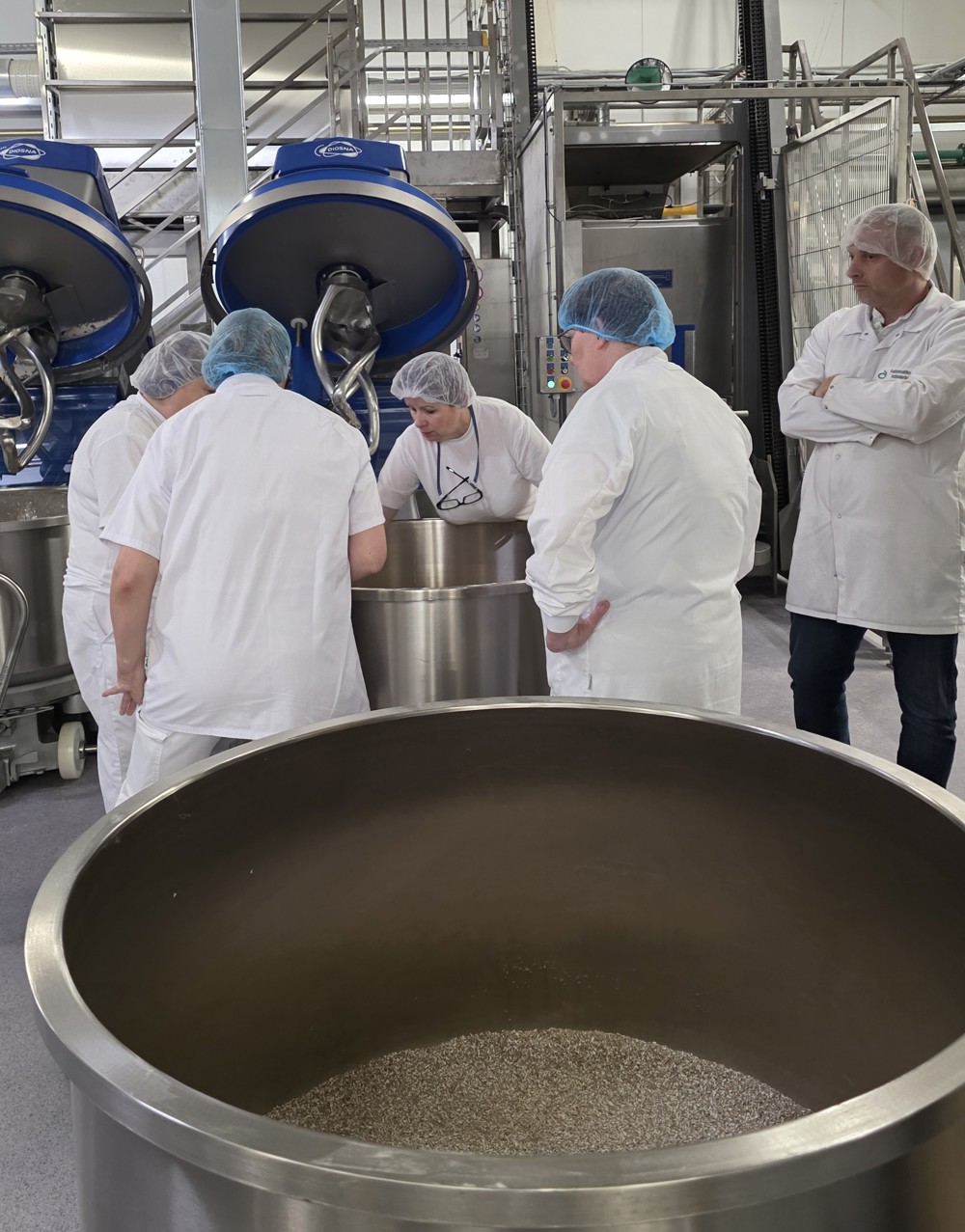
Back in December last year, a sizeable delegation of colleagues from across the Lantmännen Group visited us – technologists, technical specialists and marketing colleagues. They assessed whether our line could be used to produce portion breads for the Danish market.
In terms of capacity, the line can operate in four shifts, but at the time it was running only one. We trialled products intended for the Danish market, carried out extensive testing, discussed the results and evaluated what worked, what did not and what needed to be changed.
In January, we received feedback that our Danish colleagues were pleased with the results, and at the beginning of April we received final approval for the investment in new equipment. We then completed all the main preparation work within approximately three to four months. By August, we had already started producing three new products.
What had to be adapted on the existing line?
We had already been producing portion breads on this line, but both the recipes and the characteristics of the dough were different, so quite a lot had to be redesigned and adapted.
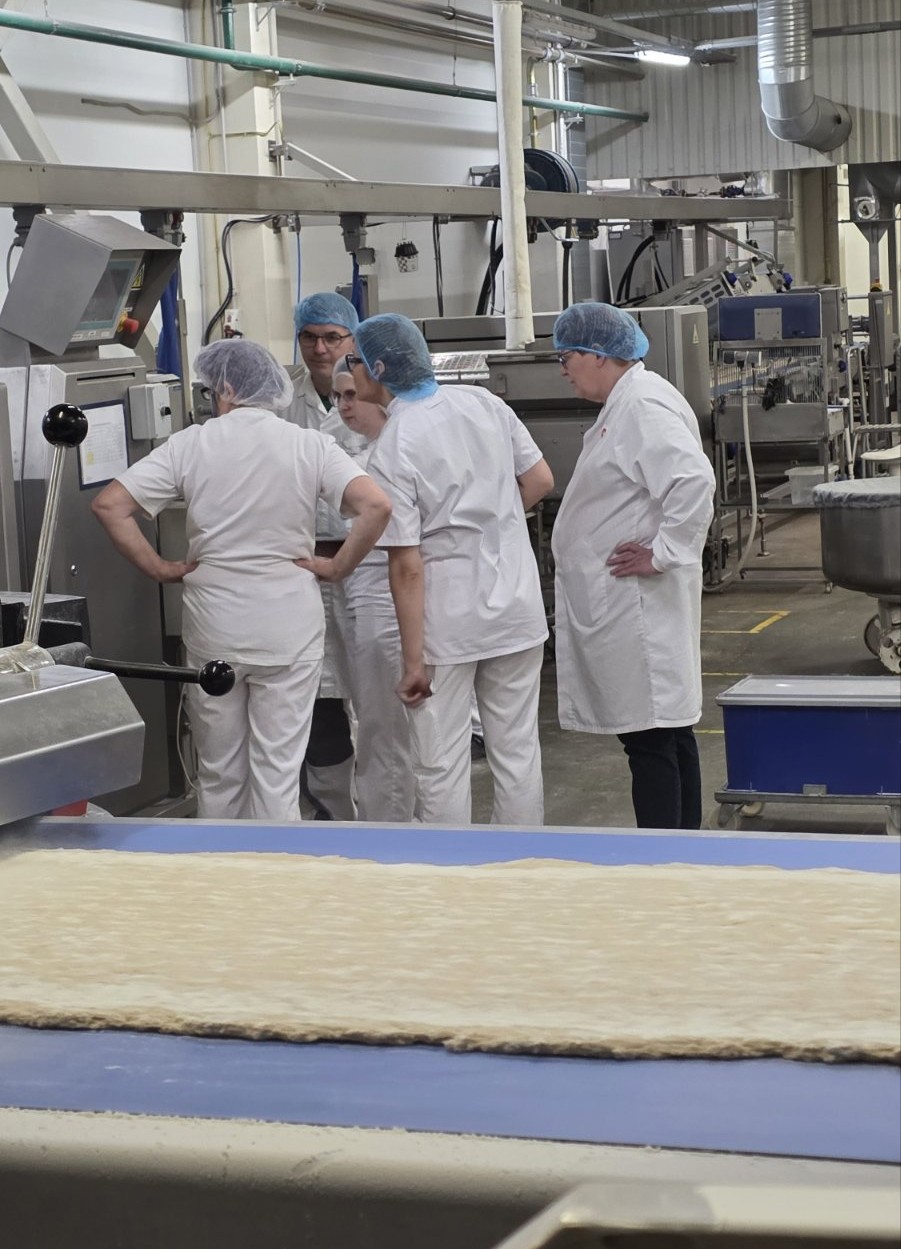
We invested in new dough preparation and processing equipment, modified the product forming line and adjusted the operating modes and settings of the existing equipment, including decoration, cutting, scoring and other processes.
There was another important challenge: the line was already producing portion breads for the Lithuanian market. We therefore had to plan all the work and stock levels in such a way that neither consumers nor retailers experienced any disruption and continued to receive the usual volumes they needed.
Will these breads be intended only for foreign markets?
Testing is currently under way. Our product development and marketing colleagues are assessing how relevant these products could also be for Lithuanian consumers.
They are extremely popular in Scandinavia, but Lithuanian and Scandinavian tastes are different, so we cannot simply assume that the same product will work equally well in every market. It needs to be tested and evaluated.
At the same time, we have already received enquiries about these products from Sweden and Norway as well.
Following the project, the capacity of the line has increased almost threefold, reaching up to 170 tonnes per month.
What were the biggest challenges during the project?
One of them was very practical – most of the installation work for the new equipment took place during the summer. Some of our technologists and technical specialists had to postpone their summer holidays to ensure that the work was completed on time and according to schedule.
We also had to fine-tune the entire production process very precisely: the operation of the mixers, conveyor speeds, proving and baking times, as well as other stages. And, of course, we had to plan supply for the period when the line itself had to be shut down.
We also needed to put together an additional shift so that we could produce the planned volumes on time. Finding and training people within such a short period was a considerable challenge.
In the end, everything worked out, and I am very grateful to the entire team for that.
Who would you most like to thank?
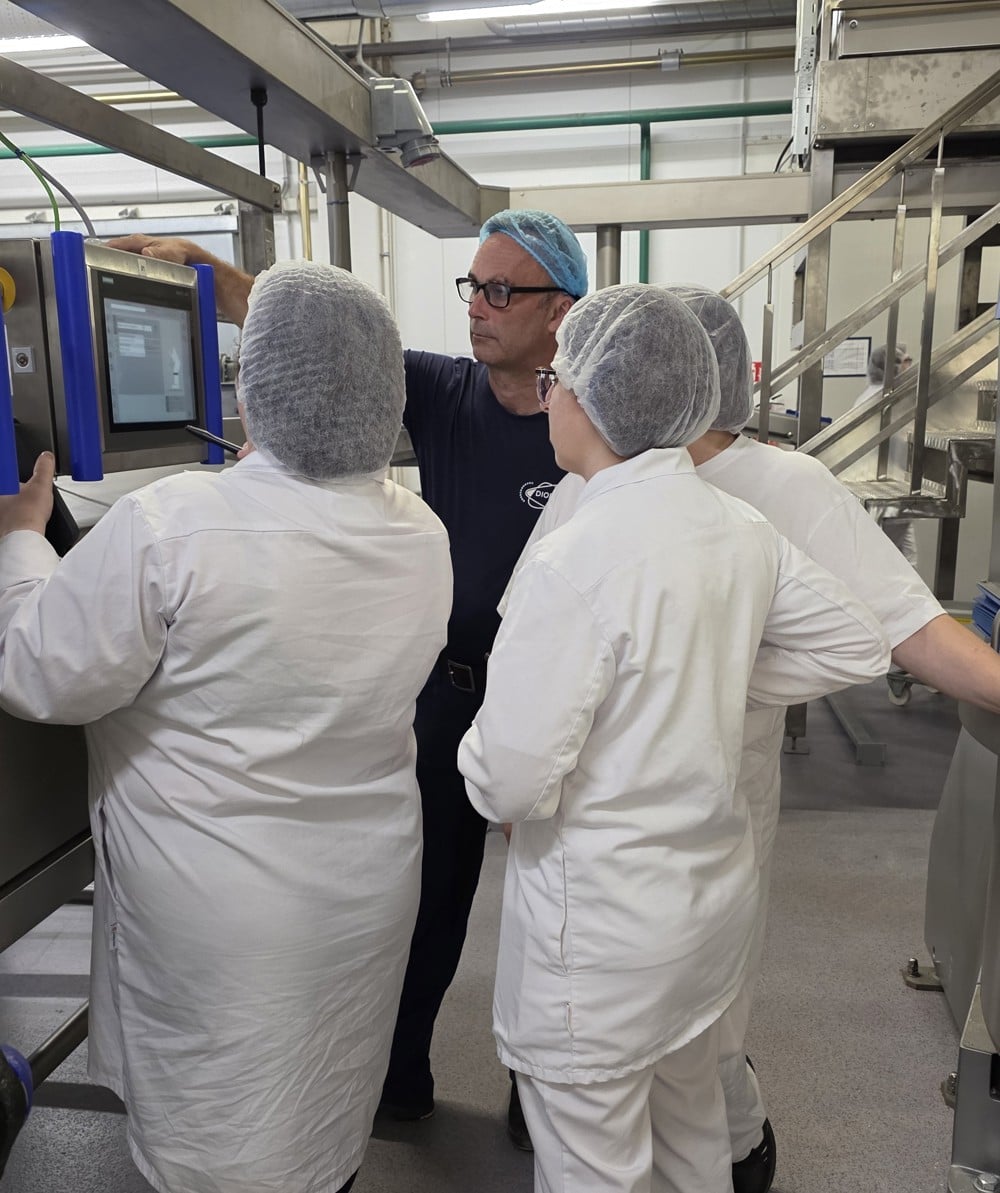
First of all, our colleagues from the new product development team in Finland. They came to Vilnius and worked alongside us for two weeks until we had fine-tuned everything.
Producing a small quantity for testing is one thing; launching an entire line for mass production is something completely different. That is when various issues and nuances emerge that simply do not become apparent in test batches. Our colleagues worked side by side with our team until we had resolved every issue. I am very grateful to them.
I would also like to sincerely thank our bakery team: technologist Alina Zibalienė, Technical Manager Andrius Pauža and Audrius Lataitis, who coordinated the project on site.
I am also grateful to all five of our production shift managers. They did an enormous amount of work. They had to work both with an international team and with employees speaking different languages. The project involved not only colleagues from Finland and Estonia, but also employees from Cameroon, Pakistan and Nigeria. It is a truly international team, so bringing everyone together requires both skill and a genuine willingness to understand one another.
We also had to overcome the language barrier, because the vast majority of our employees do not speak English, yet everyone still needs to work together. We looked for different ways to communicate – we used translation apps and also have access to a dedicated telephone interpreting service. I am very pleased that the team simply kept looking for solutions.
I am incredibly grateful to the entire production team. You cannot deliver a project like this without a united team. We also received a great deal of positive feedback and appreciation from our Danish colleagues.
Why is this line important for the future of the Vilnius bakery?
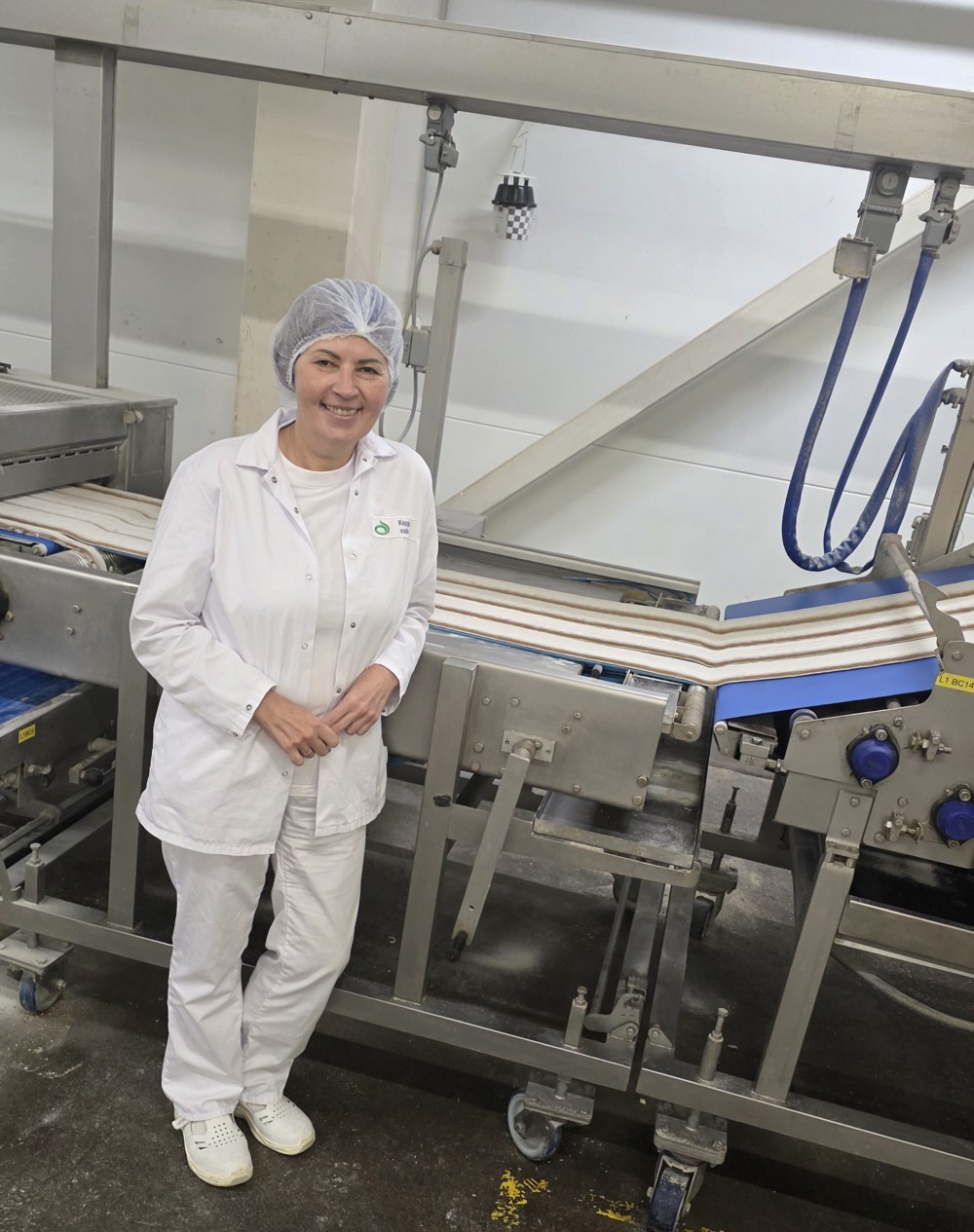
It is a highly specialised line – you cannot produce other types of products on it; it is specifically designed for portion breads. For us as a bakery, it is therefore very important to use it as efficiently as possible.
At the same time, it offers considerable flexibility: we can change and expand the product range, adjust the shape of the products, their decoration, and the different types of toppings or coatings used on the top or bottom.
Around EUR 750,000 has been invested in the project in total.
The line is automated, but people are still essential – as line operators and in dough mixing, packaging and transport roles. Each shift requires approximately six to seven people to operate one line.
For me, therefore, this project is not simply an investment in equipment. It is also a very good example of how much can be achieved when people from different countries and different areas of expertise come together around one shared goal.