What would a BRCGS audit look like in your kitchen?

Would you dare to show your kitchen to a guest who unexpectedly arrives? Most of us hurry to clean up our homes before guests arrive. Some homes are constantly kept clean and tidy. Now imagine a professional BRCGS auditor stopping into your kitchen.
Would you dare show your kitchen to an unexpected guest?
Most of us rush to tidy up before guests arrive. Some people keep their homes clean and organised all the time.
What would BRCGS auditors check?
Now imagine that a professional auditor walks into your kitchen.
They are not simply checking whether everything looks neat.
They want to understand, in detail, whether you prepare food safely.
First, they ask where you buy your food. Do you know where the flour came from? Do you check its expiry date? How do you decide which supplier you can trust?
Then they open the cupboards. Is the flour stored somewhere dry and in a sealed container? Are household chemicals kept away from food? Are opened packages properly closed? How do you make sure pantry moths do not get in?
Next comes the fridge. Is it at the right temperature? Do the doors seal properly? Is raw meat kept away from vegetables?
Then it is time to look at the food you prepare.
They watch how you wash your hands. Did you tie your hair back and remove your earrings before entering the kitchen? How do you know that a dish has been cooked properly? Is the thermometer you use to measure the temperature accurate? How do you clean surfaces? How do you make sure that, after cleaning, there is no dirt or cleaning product residue left behind? Do you state the ingredients and weight correctly?
The auditor is interested even in details that you probably never think about in everyday life: whether a dish is cracked, whether objects stored on top of a cupboard could fall into food, or whether products containing allergens are stored properly.
And one more important question.
If you found out today that one of the food products you had used was unsafe, could you say exactly which dishes it had been used in and when?
Sounds like a very thorough inspection of your kitchen.
According to Viktorija Lėgaudaitė-Lydekaitienė, Quality Manager at Vilniaus duona, a BRCGS Food Safety audit at a food manufacturing company works in much the same way — only on an incomparably larger scale and with even greater scrutiny.
It is not just the bread that gets checked
During a BRCGS audit, the entire journey of the product is assessed — from the moment raw materials enter the bakery to the moment the finished product leaves it.
“Auditors look at how raw material suppliers are selected and assessed, how ingredients are stored, how allergens are managed, how equipment is maintained, and how temperatures and other production parameters are controlled.
They assess hygiene and cleaning, employee training, packaging and labelling, the risk of foreign bodies, laboratory testing, pest control, and the condition of equipment and premises.
Even seemingly minor details, such as the condition of walls, floors, or doors, are checked. In food manufacturing, there are no insignificant details — a crack, an area of equipment that cannot be cleaned properly, or a chemical product stored in the wrong place can all become a risk,” explains the Quality Manager.
Auditors can ask any employee detailed questions about their work.
If something went wrong
Another important part of a BRCGS audit is product traceability.
The bakery must be able to identify which raw materials were used to produce a particular batch, when it was made, and which retail outlets it was sent to. It must also be able to work backwards: given a specific raw material, the bakery must be able to identify which products it was used in.
The audit also examines how the company would respond to an incident: who would make the decisions, how product distribution would be stopped, and how the product would be recalled from the market if necessary.
An exam you prepare for all year
In other words, it is not enough to say, “We bake safely.”
BRCGS auditors do not assess a bakery that has been specially prepared for audit day. They assess the system according to which it must operate every single day.
“For us, the certificate is not simply a diploma to hang on the wall. It is independent confirmation for our customers and partners that food safety and quality processes at Vilniaus duona bakeries work effectively every day. This is particularly important when supplying bread to international retail chains. We also export to the United States, Canada, and other markets, and our partners require reliable third-party certification,” said Viktorija Lėgaudaitė-Lydekaitienė, Quality Manager at Vilniaus duona.
Bakeries awarded the highest AA+ BRCGS grade
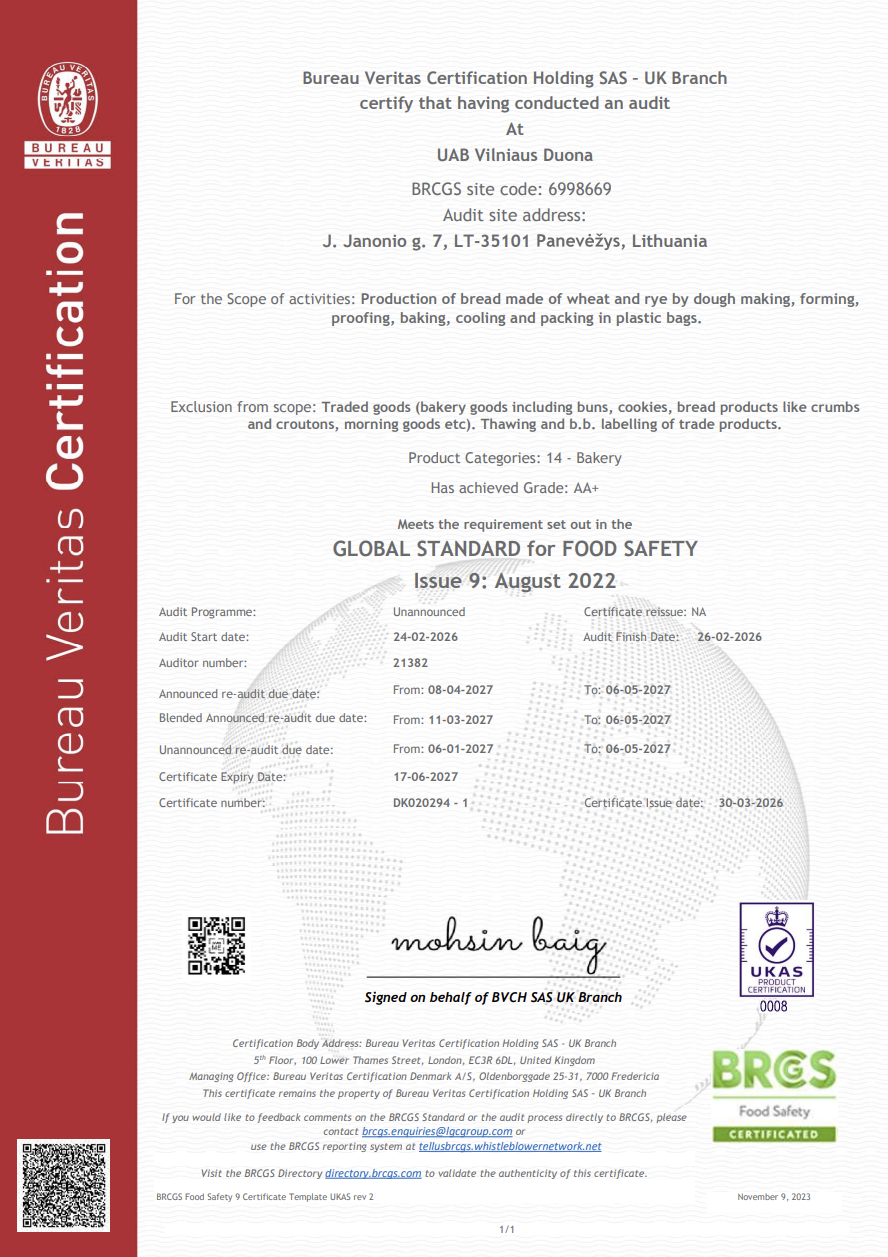
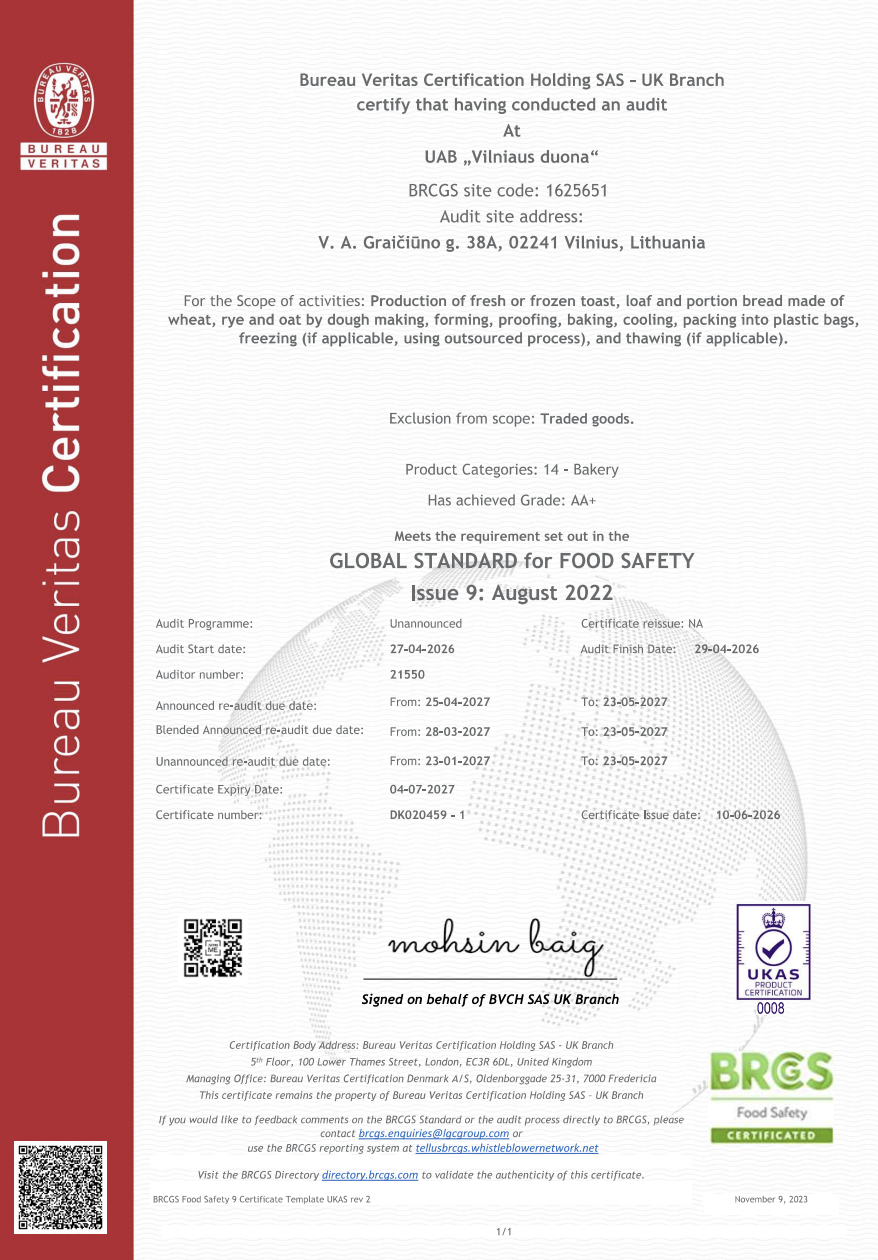
Both Vilniaus duona bakeries have been awarded AA+ grade BRCGS Food Safety certificates. But what does that plus sign mean?
“That plus sign is a very important detail. It shows that the bakeries were assessed during an unannounced audit. Going back to the analogy of your home, it means your guests call you when they are practically turning into your driveway. There is no panic because you already have a system at home that keeps things organised, making it much easier to be ready for visitors,” says Viktorija.
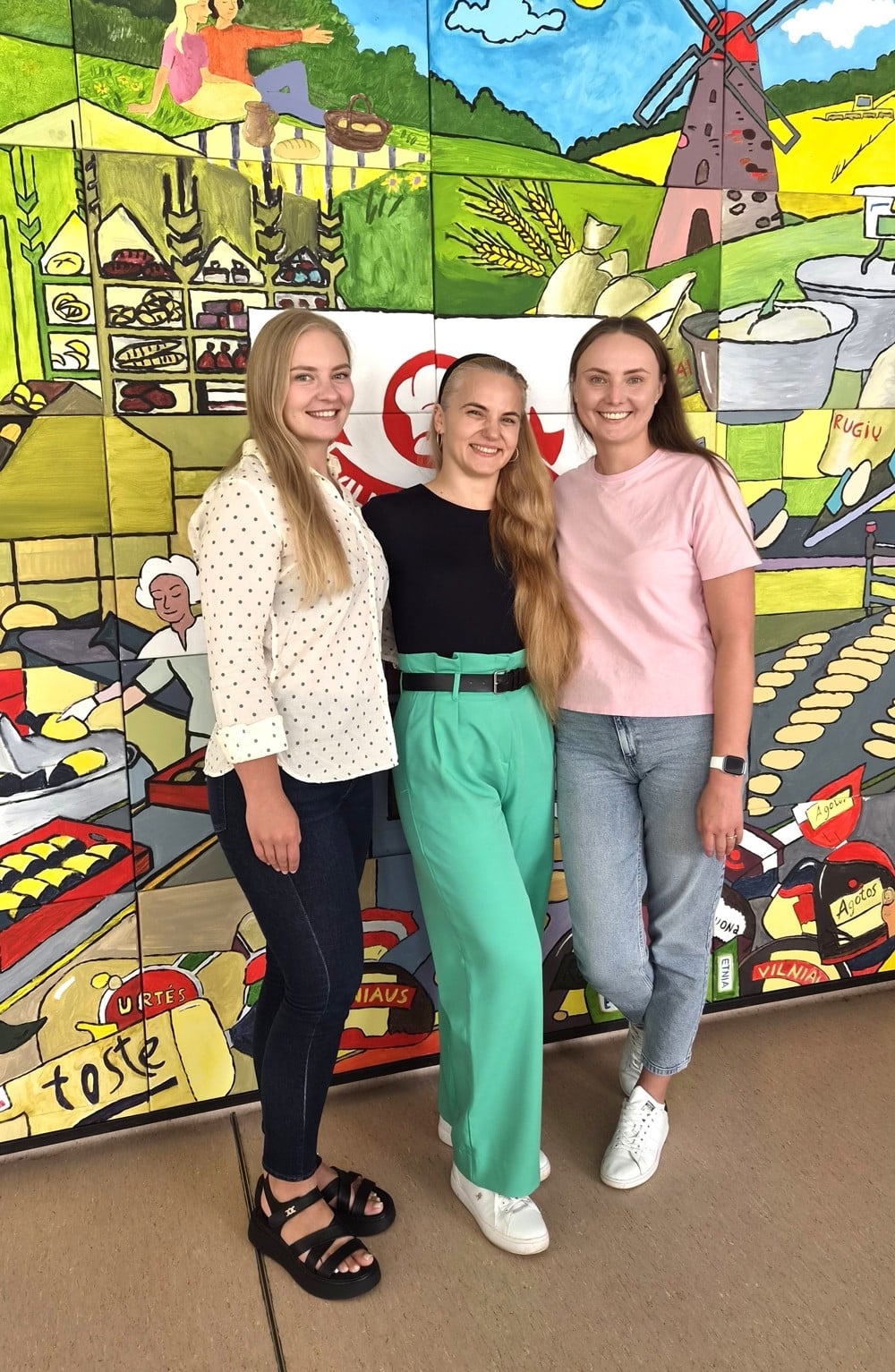
She points out that colleagues across all departments contribute to keeping every process and every step in order — from technical engineers, technologists, and logistics teams to quality specialists and bakery managers.
“Even though we have managed to achieve this rating for many years, maintaining such a high standard every single time is a huge accomplishment. The auditors also change every year. They come not only from Lithuania, but also from Finland, Denmark, and other countries. One auditor may focus more on certain aspects, while another pays closer attention to something else, so it still feels like an exam. The difference is that we prepare for it all year round, including conducting internal audits every month.
And once we receive the result, we always celebrate the achievement — gathering with colleagues and bakery employees for a special lunch or dinner. I am very grateful to our colleagues for the work they do every day to ensure quality and safety,” said Viktorija Lėgaudaitė-Lydekaitienė, Quality Manager responsible for certification.
When someone buys a loaf of bread, they do not see any of these checks. And they probably should not have to think about them.
Our job is to make sure they never need to.